Truck Driver Pay in Texas (2026)
Official BLS numbers for heavy and tractor-trailer drivers (SOC 53-3032) in Texas — the largest CDL market in the country — plus what Permian energy freight, border crossings and zero state income tax do to real take-home pay.
By the HaulMath editorial team · Updated $1
Key numbers at a glance
| Metric (SOC 53-3032, statewide) | BLS OEWS, May 2025 | Typical market read (hedged) |
|---|---|---|
| Mean hourly wage | $27.88 | A step below the $28.71 national mean |
| Mean annual wage | $57,990 | vs. $59,710 nationally — about $1,720 behind |
| Median annual wage | $56,290 | Below the national median of $58,640 |
| 10th percentile (annual) | $38,150 | Entry/trainee territory, a thin floor |
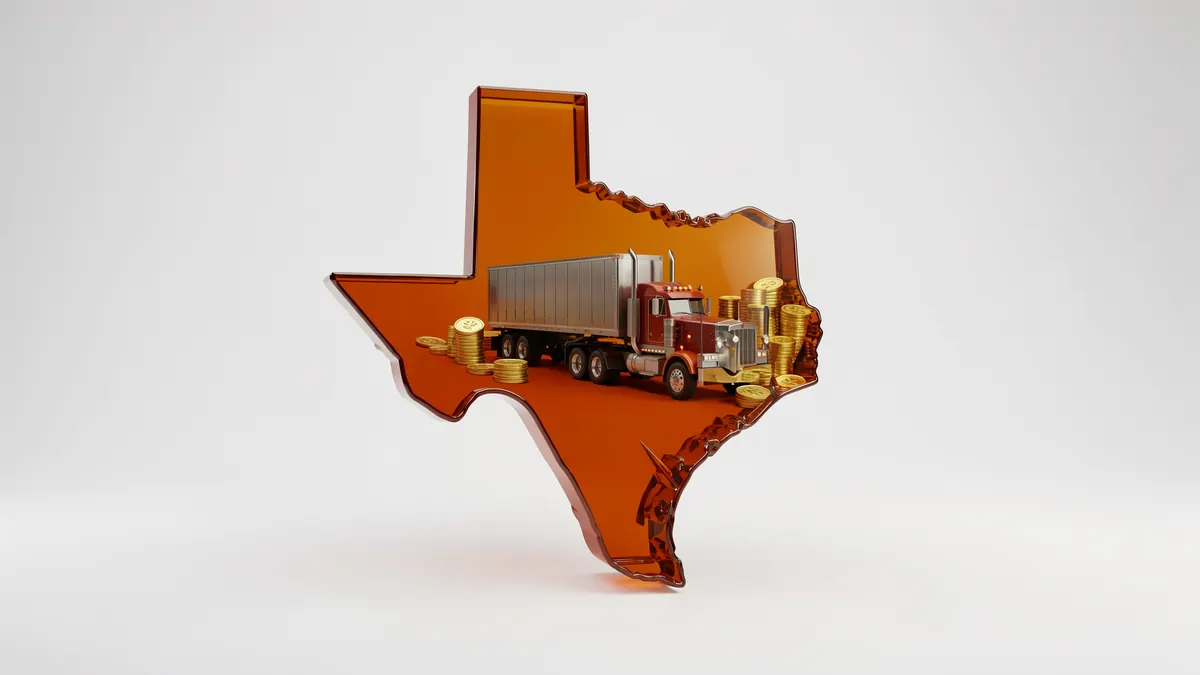
Truck driver pay in Texas: the numbers
The benchmark is the Bureau of Labor Statistics OEWS survey for heavy and tractor-trailer truck drivers, May 2025 release. Texas counts roughly 209,680 driver jobs — about 14.9 of every 1,000 jobs in the state — and it is the largest state contingent in the nation, just ahead of California's 205,090. Annual figures assume 2,080 hours, so treat them as full-time equivalents rather than guarantees.
| Metric (SOC 53-3032, statewide) | BLS OEWS, May 2025 | Typical market read (hedged) |
|---|---|---|
| Mean hourly wage | $27.88 | A step below the $28.71 national mean |
| Mean annual wage | $57,990 | vs. $59,710 nationally — about $1,720 behind |
| Median annual wage | $56,290 | Below the national median of $58,640 |
| 10th percentile (annual) | $38,150 | Entry/trainee territory, a thin floor |
| 75th percentile (annual) | $64,820 | Experienced OTR, flatbed or tanker work |
| 90th percentile (annual) | $79,400 | Essentially at the national $79,380 cut |
| Hedged hiring range, 2026 | — | Roughly $50,000–$68,000 for experienced company drivers; verify with carriers |
The headline number undersells the market. Yes, the statewide mean of $57,990 runs about $1,720 below the national mean and the median is $2,350 light — but Texas averages over a vast and uneven market: thousands of trainee-heavy dry van jobs in the big van carriers' home terminals drag the floor down ($38,150 at the 10th percentile), while the 90th percentile at $79,400 sits exactly on the national top-end cut. Specialized segments routinely clear the state average — oilfield, flatbed, hazmat tanker and cross-border work pay premiums that a statewide mean blurs together. CPM is the default structure for OTR, with hourly common in local petrochemical and port work; BLS does not track CPM and offers vary, so confirm specifics with the carrier.
How miles and freight shape pay in Texas
Texas is several freight economies stacked on one map. The Permian Basin around Midland–Odessa drives a specialized market — sand, frac equipment, produced water and crude — that swings hard with drilling activity and pays accordingly when it is hot. The Gulf Coast industrial belt anchors Houston: petrochemical plants, plastics and export containers moving through the Houston Ship Channel, with steady local and regional tanker and hazmat work. Laredo is the busiest commercial truck crossing on the U.S.–Mexico border, feeding a cross-border trade in automotive parts, appliances and produce that runs up I-35 through San Antonio, DFW and beyond. And the giant metro triangles — DFW, Houston, San Antonio–Austin — generate endless distribution, reefer grocery and regional relay freight. Drivers here genuinely choose among local (hourly, often with overtime), regional Texas and neighboring-state loops (CPM plus accessorials), and full OTR transcon lanes on I-10, I-20 and I-40.
Two operational realities shape the money. First, Texas is enormous: 500-mile deadheads exist if you accept loads carelessly, so run every offer through the load profit calculator and weigh empty miles honestly against your true cost per mile. Second, the oilfield premium is cyclical — the same frac-hauling job that pays aggressively in a boom year can vanish in a bust, so drivers chasing Permian money should price that volatility in. For more state-by-state comparisons, see the truck driver pay by state hub.
The tax angle in Texas
Texas levies no state individual income tax on wages, per the Texas Comptroller of Public Accounts. On the $57,990 state mean, that is roughly $2,300–$3,200 per year kept that an identical wage would surrender in a 4%–5.5% tax state — enough by itself to close most of the gap to the national mean, before counting Texas's generally lower cost of living outside the hottest metro submarkets. Pair that with the sheer depth of the job market — 209,680 jobs means constant openings across every segment — and the state's compensation story makes sense despite the middling BLS averages. Owner-operators still owe federal income and self-employment tax; for deduction basics that apply everywhere, see the trucking tax deductions guide.
FAQ
How much do truck drivers make in Texas?
Per BLS OEWS (May 2025), heavy and tractor-trailer drivers in Texas earn a mean of $27.88/hour or $57,990/year, with a median of $56,290 and a 10th–90th percentile spread of $38,150–$79,400.
Is Texas pay above the national average for CDL drivers?
Slightly below on wages: $57,990 vs. the national $59,710 mean. But with no state income tax and a lower cost of living, Texas take-home pay typically beats the raw numbers.
How many truck drivers work in Texas?
About 209,680 heavy and tractor-trailer drivers, per BLS OEWS (May 2025) — the largest state total in the nation, just ahead of California's 205,090.
What freight moves in Texas?
Oilfield and sand freight in the Permian Basin, petrochemical and export loads from the Houston Ship Channel, cross-border trade through Laredo, and distribution freight across the DFW and San Antonio metros.
Does Texas tax truck driver pay?
No. Texas levies no state individual income tax on wages, per the Texas Comptroller of Public Accounts. Only federal tax (and self-employment tax for owner-operators) applies.
What per-mile pay can a company driver expect in Texas?
BLS does not track CPM. Company OTR positions in Texas commonly advertise roughly $0.55–$0.75 per mile, with oilfield and hazmat roles often paying premiums; confirm offers with the carrier.