Truck Driver Pay in Pennsylvania (2026)
Official BLS numbers for heavy and tractor-trailer drivers (SOC 53-3032) in Pennsylvania — one of the nation's biggest driver labor markets, paying almost exactly the national mean — plus the I-78/I-81 warehouse belt, Turnpike economics and the flat 3.07% tax.
By the HaulMath editorial team · Updated $1
Key numbers at a glance
| Metric (SOC 53-3032, statewide) | BLS OEWS, May 2025 | Typical market read (hedged) |
|---|---|---|
| Mean hourly wage | $28.67 | Within $0.04 of the $28.71 national mean |
| Mean annual wage | $59,640 | vs. $59,710 nationally — essentially identical |
| Median annual wage | $58,580 | Median and mean nearly equal — deep, balanced market |
| 10th percentile (annual) | $43,560 | Middling entry floor |
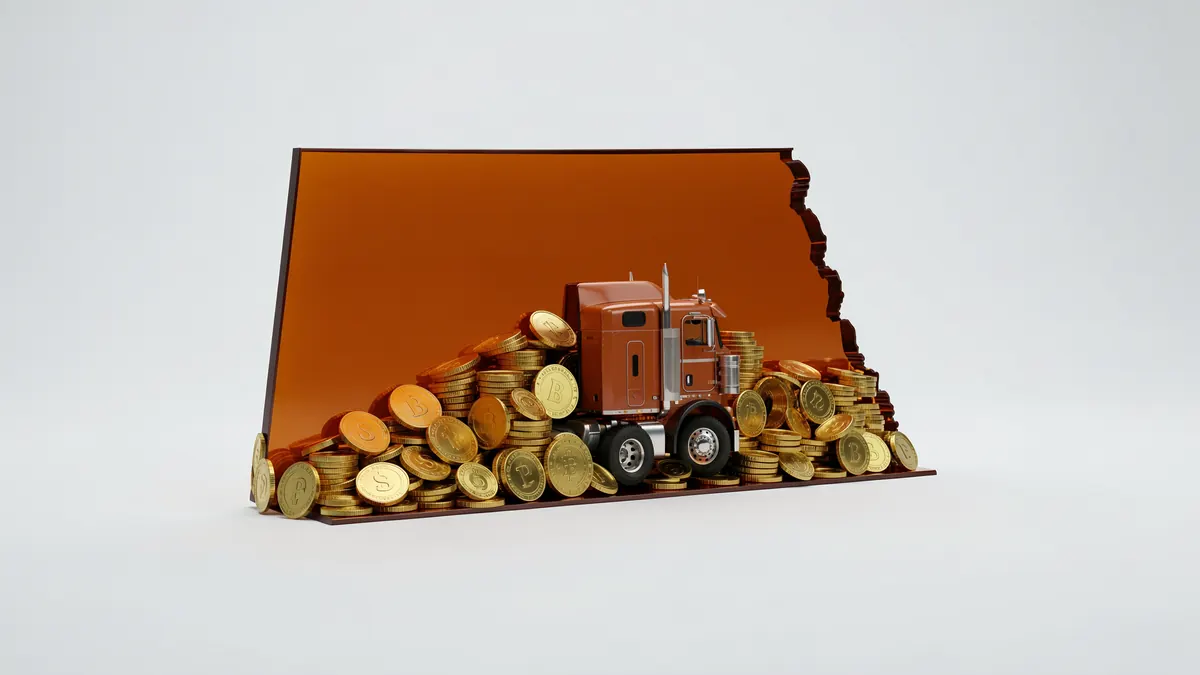
Truck driver pay in Pennsylvania: the numbers
Figures come from the Bureau of Labor Statistics OEWS survey for heavy and tractor-trailer truck drivers, May 2025 release. Pennsylvania employs about 87,550 of them — the largest driver pool among the states profiled in this series, over 4% of the national 2,062,040 — and pays a mean of $28.67 an hour, within a dime of the $28.71 national mean. Annual figures assume 2,080 hours.
| Metric (SOC 53-3032, statewide) | BLS OEWS, May 2025 | Typical market read (hedged) |
|---|---|---|
| Mean hourly wage | $28.67 | Within $0.04 of the $28.71 national mean |
| Mean annual wage | $59,640 | vs. $59,710 nationally — essentially identical |
| Median annual wage | $58,580 | Median and mean nearly equal — deep, balanced market |
| 10th percentile (annual) | $43,560 | Middling entry floor |
| 75th percentile (annual) | $65,830 | Below the $69,120 national 75th — thin top-heavy niches |
| 90th percentile (annual) | $78,330 | Close to the $79,380 national 90th |
| Hedged hiring range, 2026 | — | Roughly $50,000-$70,000 for experienced company drivers; verify with carriers |
Pennsylvania is the national average, at scale — mean, median and both upper percentiles land within about 1.5% of the national cuts. That is what happens when one state contains a high-wage Northeast distribution economy, a moderate-wage industrial corridor and a big through-freight sector all at once: the segments average out. The practical read for drivers is optionality rather than outliers: you can chase drayage and dedicated import work in the east at Northeast-adjacent rates, or take cheaper through-freight seats, and the statewide numbers won't tell you which you got. BLS does not track CPM; Northeast regional positions commonly advertise roughly $0.60-$0.78 per mile, with drayage and local jobs paid hourly or per-move — confirm with carriers.
How miles and freight shape pay in Pennsylvania
Pennsylvania is where East Coast consumption meets its warehouse floor. The I-78/I-81 corridor — the Lehigh Valley (Allentown-Bethlehem) and the Harrisburg-Carlisle belt — is one of the densest distribution clusters in the country, purpose-built to feed the New York and New Jersey metro a day's drive away: import containers drayed from Port of New York-New Jersey terminals are transloaded, sorted and re-shipped by the thousands of loads. That economy supports a large pool of regional short-haul jobs, typically a 200-500 mile radius, that get drivers home — the dominant work pattern here (hedged). The rest of the state layers on: Marcellus and Utica shale gas-field hauling (water, sand, pipeline) in the southwest and northcentral regions, which pays oilfield-style premiums; Philadelphia's Delaware River port and refinery-legacy industrial freight; Pittsburgh's steel and materials scene; and the Turnpike (I-76) plus I-80 carrying transcontinental through-traffic that employs terminal and relay drivers statewide. One cost note every operator knows: Pennsylvania tolls are among the heaviest in the nation, and the Turnpike is the spine of the state's truck routes.
For owner-operators, eastern Pennsylvania is one of the best lane-balanced markets in the country — outbound warehouse freight west and south, inbound imports east — but tolls and dock congestion eat margins if you don't price them: run offers through the load profit calculator with real toll and deadhead inputs, and on Northeast lanes check the fuel surcharge basis against above-average regional diesel. Compare other states on the truck driver pay by state hub.
The tax angle in Pennsylvania
Pennsylvania levies a flat 3.07% state income tax — one of the lowest flat rates in the country — with no state-level graduated brackets. The add-on is municipal: most Pennsylvania municipalities charge an earned income tax on wages, typically around 1%, with Philadelphia's wage tax far higher for residents and city-based work (verify with the Pennsylvania Department of Revenue and your municipality). For a driver earning the $59,640 mean outside Philadelphia, the combined state-plus-local bite commonly lands around 4% — notably lighter than neighboring New York and New Jersey, which is exactly why Keystone-based drivers routinely run freight into both. Owner-operators should still work the trucking tax deductions list; Turnpike tolls themselves are a deductible business expense worth tracking properly.
FAQ
How much do truck drivers make in Pennsylvania?
Per BLS OEWS, May 2025, heavy and tractor-trailer drivers in Pennsylvania earn a mean of $28.67/hour or $59,640/year — essentially equal to the $59,710 national mean — with a median of $58,580 and a 10th-90th percentile spread of $43,560-$78,330.
What freight moves in Pennsylvania?
The I-78/I-81 warehouse belt feeding the New York metro, import drayage from Port of New York-New Jersey terminals, Marcellus and Utica gas-field hauling, Philadelphia port freight, and steel and industrial loads around Pittsburgh.
Does Pennsylvania tax truck driver pay?
Yes — a flat 3.07% state income tax, one of the lowest flat rates in the country. Most municipalities add an earned income tax, typically around 1%. Verify with the PA Department of Revenue.
Why does Pennsylvania pay exactly the national average?
It is a huge, diversified market — about 87,550 driver jobs — that mixes high-wage Northeast regional and drayage work with lower-cost through-freight and local distribution, netting out almost exactly at the national mean.
Is OTR or local work more common in Pennsylvania?
Regional Northeast short-haul dominates — 200-500 mile radius runs out of the warehouse belt — with strong local distribution around Philadelphia and Pittsburgh and OTR available from national carriers.
What per-mile pay can a company driver expect in Pennsylvania?
BLS does not track CPM. Northeast regional positions commonly advertise roughly $0.60-$0.78 per mile, with drayage and local jobs paid hourly or per-move; confirm with carriers.