Truck Driver Pay in Ohio (2026)
Official BLS numbers for heavy and tractor-trailer drivers (SOC 53-3032) in Ohio — one of the biggest driver labor markets in the country at 83,060 jobs — plus the I-70/I-75 crossroads, Columbus distribution money and the flat 2.75% state tax.
By the HaulMath editorial team · Updated $1
Key numbers at a glance
| Metric (SOC 53-3032, statewide) | BLS OEWS, May 2025 | Typical market read (hedged) |
|---|---|---|
| Mean hourly wage | $29.16 | About $0.45 above the $28.71 national mean |
| Mean annual wage | $60,660 | vs. $59,710 nationally — about $950 ahead |
| Median annual wage | $59,800 | Above the $58,640 national median |
| 10th percentile (annual) | $43,670 | Solid entry floor for a big market |
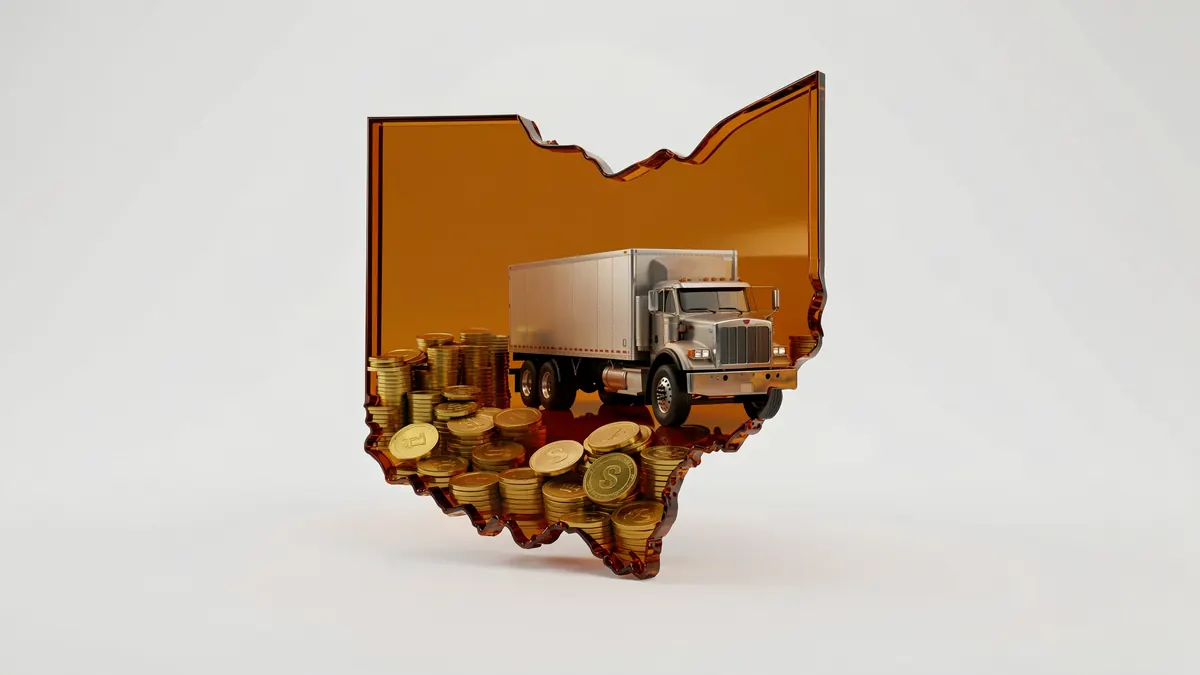
Truck driver pay in Ohio: the numbers
Figures come from the Bureau of Labor Statistics OEWS survey for heavy and tractor-trailer truck drivers, May 2025 release. Ohio employs about 83,060 of them — roughly 4% of the national total of 2,062,040 — and pays a mean of $29.16 an hour, a shade above the $28.71 national mean. Annual figures assume 2,080 hours.
| Metric (SOC 53-3032, statewide) | BLS OEWS, May 2025 | Typical market read (hedged) |
|---|---|---|
| Mean hourly wage | $29.16 | About $0.45 above the $28.71 national mean |
| Mean annual wage | $60,660 | vs. $59,710 nationally — about $950 ahead |
| Median annual wage | $59,800 | Above the $58,640 national median |
| 10th percentile (annual) | $43,670 | Solid entry floor for a big market |
| 75th percentile (annual) | $71,260 | LTL, dedicated and private-fleet work |
| 90th percentile (annual) | $77,650 | Strong ceiling; specialized and senior hourly |
| Hedged hiring range, 2026 | — | Roughly $52,000-$70,000 for experienced company drivers; verify with carriers |
Ohio's wage distribution is unusually compact — mean and median sit within $860 of each other, and the 10th-to-90th percentile band ($43,670 to $77,650) is narrower than in most states this series covers. That is what a deep, diversified market looks like: with tens of thousands of jobs spread across LTL terminals, private fleets, regional distribution and OTR carriers, no single employer type sets the price, and drivers have real lateral mobility without relocating. It also means less of the extreme upside you see in energy states — the top decile is $77,650, respectable but not North Dakota's $83,330. BLS does not track CPM; Midwest regional and OTR roles commonly advertise roughly $0.60-$0.78 per mile, and LTL or local jobs pay hourly — confirm with carriers.
How miles and freight shape pay in Ohio
Ohio is a crossroads state with a manufacturing spine. I-70 and I-75 intersect near Dayton, putting the state within a one-day drive of a huge share of U.S. and Canadian markets — which is why national carriers pin major terminals here and why regional lanes radiate outward in every direction. Columbus has become the freight crown: one of the Midwest's biggest warehouse and fulfillment clusters, anchored by the Rickenbacker Global Logistics Park with its intermodal ramp, generating thousands of local, dedicated and drayage-adjacent jobs that pay hourly and get drivers home. Manufacturing fills out the map: auto plants around Marysville and Toledo feed just-in-time parts lanes that reward reliability; Cleveland moves steel and industrial materials; the northwest is farm country running grain and ag inputs seasonally; and Ohio's famously dense LTL network — terminal after terminal along every interstate — hires road and city drivers on hourly or mileage-plus-hourly hybrids.
Structurally, Ohio does everything at scale (hedged): hourly city and LTL work around the metros, home-weekend regional runs pinned to the crossroads, and full OTR for the nationals. For owner-operators, the state's balance is a genuine asset — outbound manufactured goods, inbound consumer freight and intrastate distribution give you lane options in most directions, so a weak market in one segment rarely strands you. Run offers through the load profit calculator with realistic Ohio cost numbers, and on Midwest lanes watch the fuel surcharge against volatile diesel. Compare other states on the truck driver pay by state hub.
The tax angle in Ohio
Ohio's state income tax went flat at 2.75% for 2026 (per the Tax Foundation's 2026 rate table) — one of the lower state rates you'll find attached to a wage base this size. The catch is municipal: most Ohio cities and villages levy their own income tax on wages earned or residents working there, commonly in the 1%-3% range, and drivers who live in one city and work from another can owe both with a credit in between. For a trucker domiciled in, say, a small township, the all-in state-plus-local bite can stay near 3%; for a Columbus or Cleveland resident it lands meaningfully higher. Owner-operators should track duty city versus resident city carefully and run the trucking tax deductions list. Verify current rates with the Ohio Department of Taxation and your municipality.

FAQ
How much do truck drivers make in Ohio?
Per BLS OEWS, May 2025, heavy and tractor-trailer drivers in Ohio earn a mean of $29.16/hour or $60,660/year — slightly above the $59,710 national mean — with a median of $59,800 and a 10th-90th percentile spread of $43,670-$77,650.
What freight moves in Ohio?
Crossroads freight on I-70 and I-75, a big warehouse and intermodal cluster around Columbus (including Rickenbacker), auto and parts traffic for the Honda and Toledo plants, steel and industrial loads in Cleveland, and LTL density across the state.
Does Ohio tax truck driver pay?
Statewide it moved to a flat 2.75% income tax for 2026 — but most Ohio cities also levy their own municipal income tax, commonly around 1%-3%. Verify with the Ohio Department of Taxation and your city.
Is Ohio a good state for CDL drivers?
Yes for volume: about 83,060 driver jobs, a mean wage slightly above the national mean, a low flat state tax, and one of the densest mixes of local, LTL, regional and OTR work in the Midwest.
Is OTR or local work more common in Ohio?
Ohio does everything at scale: hourly local and LTL work around the metros, regional runs pinned to the I-70/I-75 crossroads, and plenty of national OTR recruiting — one reason the wage distribution is unusually compact.
What per-mile pay can a company driver expect in Ohio?
BLS does not track CPM. Midwest regional and OTR positions commonly advertise roughly $0.60-$0.78 per mile, with LTL and local jobs paid hourly; confirm with carriers.