Truck Driver Pay in Hawaii (2026)
Official BLS numbers for heavy and tractor-trailer drivers (SOC 53-3032) in Hawaii, what island freight does to the job mix, and how the state's progressive income tax and cost of living hit take-home pay.
By the HaulMath editorial team · Updated $1
Key numbers at a glance
| Metric (SOC 53-3032, statewide) | BLS OEWS, May 2025 | Typical market read (hedged) |
|---|---|---|
| Mean hourly wage | $29.26 | Above the $28.71 national mean |
| Mean annual wage | $60,850 | vs. $59,710 nationally — about $1,140 ahead |
| Median annual wage | $59,820 | Half of drivers earn more, half less |
| 10th percentile (annual) | $47,480 | A high entry floor — few true bottom-tier jobs |
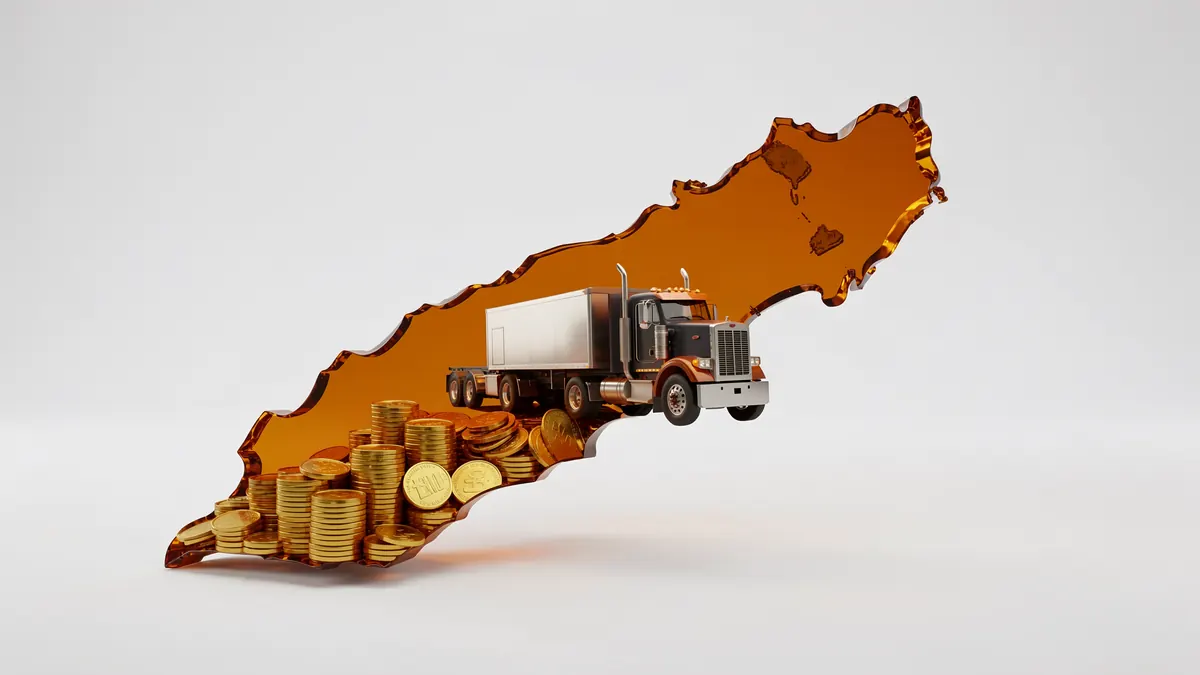
Truck driver pay in Hawaii: the numbers
The benchmark here is the Bureau of Labor Statistics OEWS survey for heavy and tractor-trailer truck drivers, May 2025 release. Hawaii is a small market — roughly 4,070 driver jobs statewide, about 6.5 of every 1,000 jobs — so single-year estimates can swing more than in big mainland states. Annual figures assume 2,080 hours, meaning full-time equivalents rather than guaranteed paychecks.
| Metric (SOC 53-3032, statewide) | BLS OEWS, May 2025 | Typical market read (hedged) |
|---|---|---|
| Mean hourly wage | $29.26 | Above the $28.71 national mean |
| Mean annual wage | $60,850 | vs. $59,710 nationally — about $1,140 ahead |
| Median annual wage | $59,820 | Half of drivers earn more, half less |
| 10th percentile (annual) | $47,480 | A high entry floor — few true bottom-tier jobs |
| 75th percentile (annual) | $64,910 | Senior local and yard-adjacent work |
| 90th percentile (annual) | $74,530 | Top of a compressed island market |
| Hedged hiring range, 2026 | — | Roughly $55,000–$72,000 for experienced company drivers; verify with carriers |
Notice how narrow the band is: from the 10th percentile ($47,480) to the 90th ($74,530) spans under $27,000, which is tight by national standards — the spread nationally runs $40,140 to $79,380. Hawaii's floor is unusually high because almost nothing in the state's freight economy resembles the low-cost mega-carrier training market; there are no 48-state trainee mills in Honolulu. The ceiling, meanwhile, is modest because there is no long-haul premium to chase — miles cap out quickly on an island. Hourly and hourly-plus-overtime structures dominate, and BLS does not track cents-per-mile pay, which matters less here than in any other state.
How miles and freight shape pay in Hawaii
Hawaii is the one state where "OTR" barely exists. Nearly everything the islands consume arrives by water under the Jones Act — containerized goods carried from West Coast gates (typically Los Angeles/Long Beach, Oakland and Seattle) by carriers such as Matson and Pasha to Honolulu Harbor's Sand Island terminals and to neighbor-island ports. From there the job market splits three ways: harbor drayage running containers to distribution centers, short urban relays feeding grocery and retail chains, and the inter-island system, where ocean barges — historically dominated by Young Brothers — carry trailers between Oahu, Maui, the Big Island and Kauai, with drivers handling yard and pier work on both ends. Construction aggregates, fuel, propane and perishable food round out the traffic mix, per the state Department of Transportation's harbor freight planning.
That geography produces a regional and local job market almost by definition, and pay behavior follows: steady hourly wages, overtime after 40 hours, and strong demand whenever construction or port volumes tick up — but no per-mile treadmill, because a "long haul" in Hawaii might be 30 miles of H-1 congestion. Cost of living is the real wage story: housing, fuel and groceries in Hawaii typically run well above mainland averages, so a $60,850 mean that looks $1,140 ahead of the nation buys far less than a mainland dollar. Owner-operators are rare; those who do run equipment should price every move against the cost per mile realities of island fuel prices and run prospective jobs through the load profit calculator. For how Hawaii compares with mainland markets, see the truck driver pay by state hub.
The tax angle in Hawaii
Hawaii taxes wages through a progressive system with a dozen brackets running from 1.4% to a top rate of 11% (2026 legislation added a 13% bracket that only touches very high incomes). The 2023 tax-cut law has been phasing brackets down and widening them since 2024, and a driver earning near the statewide mean generally sits in the mid-single digits effective-rate territory — call it roughly $2,500–$3,500 a year to the state before credits. On an island where living costs dwarf most mainland metros, that state tax bite is real but secondary to housing costs. Verify current brackets and withholding with the Hawaii Department of Taxation, and for deduction basics that apply to drivers everywhere, see the trucking tax deductions guide.
FAQ
How much do truck drivers make in Hawaii?
Per BLS OEWS (May 2025), heavy and tractor-trailer drivers in Hawaii earn a mean of $29.26/hour or $60,850/year, with a median of $59,820 and a 10th–90th percentile spread of $47,480–$74,530.
Is Hawaii pay above the national average for CDL drivers?
Slightly. Hawaii's $60,850 mean is about $1,140 above the national $59,710 for SOC 53-3032, but Hawaii's cost of living — the highest in the nation — absorbs that premium many times over.
What freight moves in Hawaii?
Containerized consumer goods and food arriving by Jones Act carriers at Honolulu Harbor, inter-island barge transshipment to the neighbor islands, plus construction materials, fuel and propane distribution statewide.
Does Hawaii tax truck driver pay?
Yes. Hawaii runs a progressive income tax from 1.4% up to an 11% top rate (a new 13% bracket in 2026 applies only to very high incomes). A driver near the statewide mean lands in mid-single-digit effective territory. Verify current brackets with the Hawaii Department of Taxation.
Is local or OTR work more common in Hawaii?
Almost everything is local or short-haul regional. There is no mainland OTR from the islands — drivers run port drayage, harbor-to-warehouse relays and inter-island barge yard work.
What per-mile pay can a company driver expect in Hawaii?
BLS does not track CPM, and Hawaii's short island miles make hourly pay the norm rather than per-mile structures. Confirm current offers with the carrier; most positions are advertised as hourly with benefits.