Truck Driver Pay in Alabama (2026)
Official BLS numbers for heavy and tractor-trailer drivers (SOC 53-3032) in Alabama, plus what the state's port, auto-plant and interstate freight network — and its 2%/4%/5% income tax — actually do to take-home pay.
By the HaulMath editorial team · Updated $1
Key numbers at a glance
| Metric (SOC 53-3032, statewide) | BLS OEWS, May 2025 | Typical market read (hedged) |
|---|---|---|
| Mean hourly wage | $27.03 | Below the $28.71 national mean |
| Mean annual wage | $56,230 | vs. $59,710 nationally — about $3,480 behind |
| Median annual wage | $52,120 | Half of drivers earn more, half less |
| 10th percentile (annual) | $38,240 | Entry/trainee territory |

Truck driver pay in Alabama: the numbers
The wage benchmark for this page is the Bureau of Labor Statistics OEWS survey for heavy and tractor-trailer truck drivers in Alabama, May 2025 release — the federal government's own series, covering roughly 36,650 driver jobs statewide. That is about 17.3 of every 1,000 jobs in Alabama, a location quotient of 1.31 — truck driving is roughly 31% more concentrated here than in the nation as a whole. Annual figures assume 2,080 hours, so treat them as full-time equivalents, not guarantees.
| Metric (SOC 53-3032, statewide) | BLS OEWS, May 2025 | Typical market read (hedged) |
|---|---|---|
| Mean hourly wage | $27.03 | Below the $28.71 national mean |
| Mean annual wage | $56,230 | vs. $59,710 nationally — about $3,480 behind |
| Median annual wage | $52,120 | Half of drivers earn more, half less |
| 10th percentile (annual) | $38,240 | Entry/trainee territory |
| 75th percentile (annual) | $64,870 | Experienced, dedicated or specialized work |
| 90th percentile (annual) | $77,620 | Top of the state market — private fleets, heavy haul |
| Hedged hiring range, 2026 | — | Roughly $48,000–$62,000 for experienced company drivers; verify with carriers |
Two things stand out. First, Alabama sits below the national mean on every wage cut BLS publishes — mean, median and all three percentiles shown here — which is the classic profile of a low-cost-of-living Southeastern state where national carriers recruit aggressively. Second, the spread between the median ($52,120) and the 90th percentile ($77,620) is wide: the floor is set by regional van and local hourly work, while the ceiling belongs to private fleets, dedicated automotive runs and specialized equipment. Per-mile advertising dominates OTR postings; BLS does not track CPM, but company OTR and regional positions in the Southeast commonly advertise roughly $0.50–$0.70 per mile — confirm current offers with the carrier.
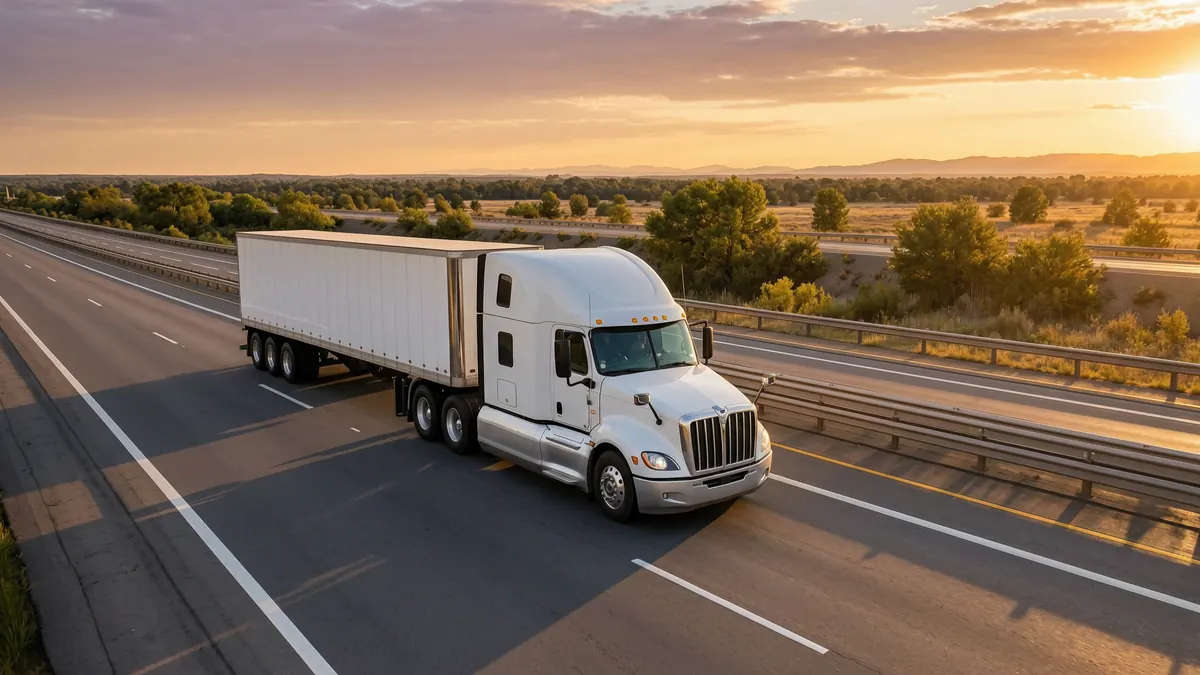
How miles and freight shape pay in Alabama
Alabama is a pass-through state that also generates its own freight, which is why 1.31 location quotient pays the bills. I-65 runs Nashville–Birmingham–Montgomery–Mobile; I-20 connects Atlanta, Birmingham and Tuscaloosa before bending west toward Texas; I-10 brushes the Gulf Coast; I-59 drops south to New Orleans. On top of the corridors: the Port of Mobile's container terminal feeds a growing drayage pool; Mercedes-Benz in Vance and Hyundai in Montgomery pull in auto parts and push out finished vehicles; Birmingham still moves steel, pipe and foundry freight; the Wiregrass moves poultry; the pine belt moves paper and timber; and Huntsville's aerospace and defense economy adds high-value, time-sensitive loads. Roughly speaking, three structures dominate: national OTR out of the interstate towns, regional Southeastern loops touching Atlanta, Memphis, Nashville and the Gulf, and local plant and distribution work anchored to Birmingham, Huntsville and Montgomery.
For company drivers the practical consequence is choice: Alabama is close enough to half the Southeast's freight that regional and home-weekly jobs are plentiful, and OTR drivers based here run short deadheads to load. For owner-operators, the state's low costs — cheap diesel country relative to the coasts, modest insurance market — sit against lanes that can thin out fast once you leave the interstates; a 120-mile empty leg between a paper mill and the next shipper is normal here, so run every offer through the load profit calculator and know your cost per mile cold before you quote. Fuel tax is tracked on the Alabama IFTA rates page, and more state comparisons are on the truck driver pay by state hub.
The tax angle in Alabama
Alabama taxes wages on a graduated schedule — 2% on the first $500 of taxable income for singles, 4% on the next $2,500 and 5% on everything above $3,000, with wider brackets for joint filers (per the Alabama Department of Revenue). On the $56,230 mean wage, a single filer's state income tax runs roughly $2,600 before credits — do your own math or ask a CPA. Two 2026 notes matter to drivers specifically: the state's overtime-pay income tax exemption expired June 30, 2025, so hourly local and distribution drivers who bank real overtime lost a genuine perk; and the expanded state standard deduction phases in from the 2026 tax year, which softens the blow slightly. OTR drivers still qualify for the federal per diem deduction on overnights — see the trucking tax deductions guide for what carries across state lines.
FAQ
How much do truck drivers make in Alabama?
Per BLS OEWS (May 2025), heavy and tractor-trailer drivers in Alabama earn a mean of $27.03/hour or $56,230/year, with a median of $52,120 and a 10th–90th percentile spread of $38,240–$77,620.
Is Alabama pay below the national average for CDL drivers?
Yes. The state's $56,230 mean is about $3,480 below the national $59,710 for SOC 53-3032, though Alabama's low cost of living narrows the real gap.
What freight moves in Alabama?
Containers through the Port of Mobile, auto parts and finished vehicles from the Mercedes-Benz and Hyundai plants, steel and pipe around Birmingham, poultry and paper regionally, and through-traffic on I-65, I-20, I-10 and I-59.
Does Alabama tax truck driver pay?
Yes — a graduated 2%/4%/5% income tax with a 5% top rate (per the Alabama Department of Revenue). Note the state's overtime-pay income tax exemption expired June 30, 2025.
Is local or OTR work more common in Alabama?
Roughly balanced: national OTR carriers recruit heavily across the state, while regional Southeastern lanes and local plant, distribution-center and Port of Mobile drayage jobs keep many drivers home nightly.
What per-mile pay can a company driver expect in Alabama?
BLS does not track CPM. Company OTR/regional positions in the Southeast commonly advertise roughly $0.50–$0.70 per mile; confirm current offers with the carrier.